Why Bridgesty Is the Calligraphy Font Your Small Business Branding Needs
It started with a stack of plain kraft boxes and a marker that smudged. I was standing in my small bakery kitchen, about to package a fresh batch of lavender shortbread cookies for a weekend market, and I realized my packaging looked exactly like everyone else’s. The handwritten labels I had been using were charming in a homemade way, but they weren’t helping customers remember my name. That afternoon, I opened my design folder, pulled up a script font I had recently downloaded called Bridgesty, and printed my first test label. Within a week, I had redesigned my entire product line’s packaging, refreshed my Instagram story templates, and even updated the thank-you cards I tuck into every order. The difference was immediate. My boxes went from looking like a hobby project to something customers described as “gift-worthy.”
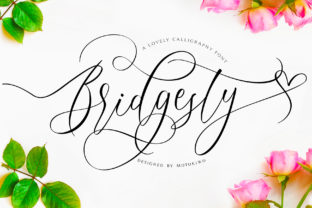
Bridgesty is a lovely calligraphy font with amazing swashes that delivers exactly the kind of romantic, polished energy a small business needs to stand out. It is part of the Script Amp category, which means it is specifically designed for display use—headlines, logos, short phrases, and any spot where you want typography to make a visual statement. Unlike many script fonts that feel either too stiff or too messy, Bridgesty strikes a balance between elegance and approachability. The letterforms flow naturally, with smooth connecting strokes that read as handwritten without sacrificing clarity. Each character carries a subtle flourish, but the font never feels overdone. The swashes are available as alternates, so you can choose versions of letters that add extra curls and tails when you want a more ornate look, or stick with the standard forms for cleaner layouts.
What impressed me most when I started testing Bridgesty on actual business materials was how consistently it performed across different sizes and surfaces. On a small skincare label measuring two inches wide, the font remained readable while still looking decorative. On a large canvas banner for my online shop, it held its personality without becoming overwhelming. This is a rare quality in script fonts. Many look beautiful on screen at 72 points but turn into an unreadable tangle when printed small. Bridgesty avoids that trap because its letter spacing is generous without being loose, and the stroke widths stay even enough to hold up at smaller sizes. For a business owner who needs one font to work on product labels, business cards, packaging, social media graphics, and maybe even a website banner, this kind of versatility is a practical time-saver.
The Moment I Realized My Labels Needed an Upgrade
I run a small candle business on the side, and for months I had been using a generic sans serif font for my product labels. It was clean, safe, and completely forgettable. When I swapped to Bridgesty for the fragrance name on each label, something clicked. Suddenly, a candle called “Honey & Vanilla” looked like it belonged in a boutique rather than a craft fair bin. The swash on the capital H gave the label a sense of luxury, while the lowercase letters kept the overall look friendly. Customers started commenting on the packaging before they even smelled the candle. That kind of visual engagement is exactly what small businesses need to create a memorable first impression.
In a world where shoppers scroll past dozens of similar products in seconds, your typography is often the first thing they register. A display font like Bridgesty signals intention. It says, “I put thought into this.” When you use it consistently across your shop banner, product photos, thank-you cards, and packaging, you build visual consistency that makes your brand feel established and trustworthy. Consistency is one of the easiest ways to look professional without spending a fortune on a full rebrand. Simply picking one script font for your headlines and pairing it with a clean sans serif font for body text can unify everything from your Instagram posts to your shipping inserts.
Real Ways I Used Bridgesty Across My Business Materials
Once I saw how Bridgesty transformed my candle labels, I started using it in other places. Here are the specific applications that worked well for me:
- Product labels and packaging: I used Bridgesty for the product name on candle jars, soap wraps, and bakery boxes. At sizes between 14 and 24 points, the font stayed legible and added a handcrafted feel. The swashes worked especially well on circular labels where I could let a curling letter follow the curve of the jar.
- Business cards and thank-you cards: A short phrase like “thank you” or “with love” set in Bridgesty feels generous and personal. I printed a small batch of cards using the font at 36 points on soft cream cardstock, and customers mentioned they kept the cards pinned to their bulletin boards. That kind of engagement is gold for a small brand.
- Social media graphics and Instagram stories: For quote posts and product announcements, I used Bridgesty for the main headline and paired it with a simple sans serif for the body text. The font scaled well on mobile screens, and the swashes added movement that caught the eye while scrolling.
- Menu boards and signage: A friend who owns a small café tried Bridgesty for her seasonal specials board. The script gave the chalkboard-style menu a romantic, farmhouse feel that matched her aesthetic perfectly. She kept it for the main headings and used a clean serif font for the descriptions.
- Online shop banners and promotional graphics: I updated my Etsy shop banner with a Bridgesty headline and saw a noticeable uptick in people clicking through to my listings. The font made the banner look custom-designed rather than templated, which helped my shop feel more premium.
Pairing Bridgesty with Supporting Fonts for a Polished Look
No script font works well alone across an entire brand identity. Bridgesty shines brightest when it is used as a display font for headlines, logos, and short emphasis phrases. For body text—product descriptions, ingredient lists, shipping policies, or longer social media captions—you will want a supporting font that complements the script without competing with it.
I tested several pairings and found two that consistently looked professional. The first is a clean sans serif font like Montserrat or Lato. The simplicity of a geometric sans serif contrasts nicely with Bridgesty’s flowing curves, giving your layouts breathing room. The second is an elegant serif font, such as Playfair Display or Cormorant Garamond. A serif pairing works well for brands that lean toward a vintage or editorial style, like a boutique tea company or a stationery shop. Avoid pairing Bridgesty with another ornate script font, as that can make your design feel chaotic and hard to read. Stick to one decorative element per layout, and let Bridgesty take the starring role.
For digital use, such as website banners or Instagram templates, I recommend keeping Bridgesty to headlines only. The font’s swashes and connecting strokes can become difficult to read at small sizes on mobile screens, so save it for phrases under five words. On printed materials, you have more flexibility. Business cards, product labels, and small tags can handle Bridgesty at point sizes as low as 12, but I found that 14 points gave the best balance between elegance and legibility for text-heavy labels like ingredient lists.
What to Check Before You Start Designing with Bridgesty
Before committing to any font for your business, especially one you plan to use on products, packaging, or client work, there are a few practical details to verify. Bridgesty is a premium font from the Script Amp collection, and like all commercial fonts, it may have specific licensing terms. Make sure you check whether the license covers commercial use, including selling products with the font printed on packaging, using it in logo designs for clients, or embedding it in digital templates. Many premium fonts include a standard desktop license that allows you to install the font on your computer and use it in design projects, but some restrict use in merchandise or digital downloads. If you plan to sell products with Bridgesty on the label or packaging, confirm that your license covers that scenario.
Also check the file formats included with your purchase. Most premium script fonts come as OTF (OpenType) and TTF (TrueType) files, which work on both Mac and Windows. Bridgesty should also include the swash alternates and ligatures that make it such a versatile display font. These extras are accessible through the Glyphs panel in design software like Adobe Illustrator, Canva, or Affinity Designer. If you are not familiar with accessing alternate characters, look for a quick tutorial online—it takes about ten minutes to learn, and the ability to choose different letterforms gives your branding a custom, handcrafted look that sets you apart from anyone using the default version of the same font.
In my own small business, Bridgesty has become the font I reach for whenever I need to add warmth, romance, or a touch of handmade quality to a project. It helped me move past the “generic startup” phase of my branding and into something customers actually notice and remember. Whether you run a bakery, a candle shop, a beauty brand, a boutique, or an online store selling handmade goods, a font like Bridgesty can give your customer-facing materials a polish that feels intentional without feeling corporate. And for a small business owner wearing every hat, that kind of easy, reliable design asset is worth its weight in gold.